Beavercreek Communities: Choosing Between Established And Newer Areas
July 16, 2026
July 16, 2026
If you are home shopping in Beavercreek, one of the biggest questions is not just how much house you want. It is also what kind of community fits your life best. Some buyers love the character of established areas with mature trees and larger lots, while others want the clean layout and newer floorplans of more recent subdivisions. The good news is that Beavercreek offers both, and understanding the tradeoffs can help you make a smarter, more confident move. Let’s dive in.
Beavercreek has room to be both rooted and growing. The city covers 27.3 square miles, has a population of 46,549, and still includes a meaningful amount of open, undeveloped land. That helps explain why you can find charming older neighborhoods in one part of town and newer construction in another.
The city was first settled in the early 1800s and incorporated in 1980. Today, Beavercreek describes its housing stock as ranging from custom-built homes to charming older neighborhoods. For you as a buyer, that means the local market is not one-size-fits-all.
Beavercreek is also still evolving. In 2025, the city launched Plan Beavercreek to update its land-use plan, zoning code, and property maintenance code for the first time since incorporation. That is a useful reminder that some areas feel fully established, while others may continue to change over time.
For many buyers, Beavercreek’s location is a major reason to start the search here. The city borders Wright-Patterson Air Force Base, and Beavercreek highlights U.S. 35 and Interstate 675 as its main regional roadways. That can make day-to-day access an important part of your community choice.
If you are relocating, commute time may matter just as much as square footage. This is especially true for military and defense-connected households, as well as anyone who wants easier access to shopping and services near The Mall at Fairfield Commons and The Greene Town Center. In Beavercreek, where you live can shape how smooth your routine feels.
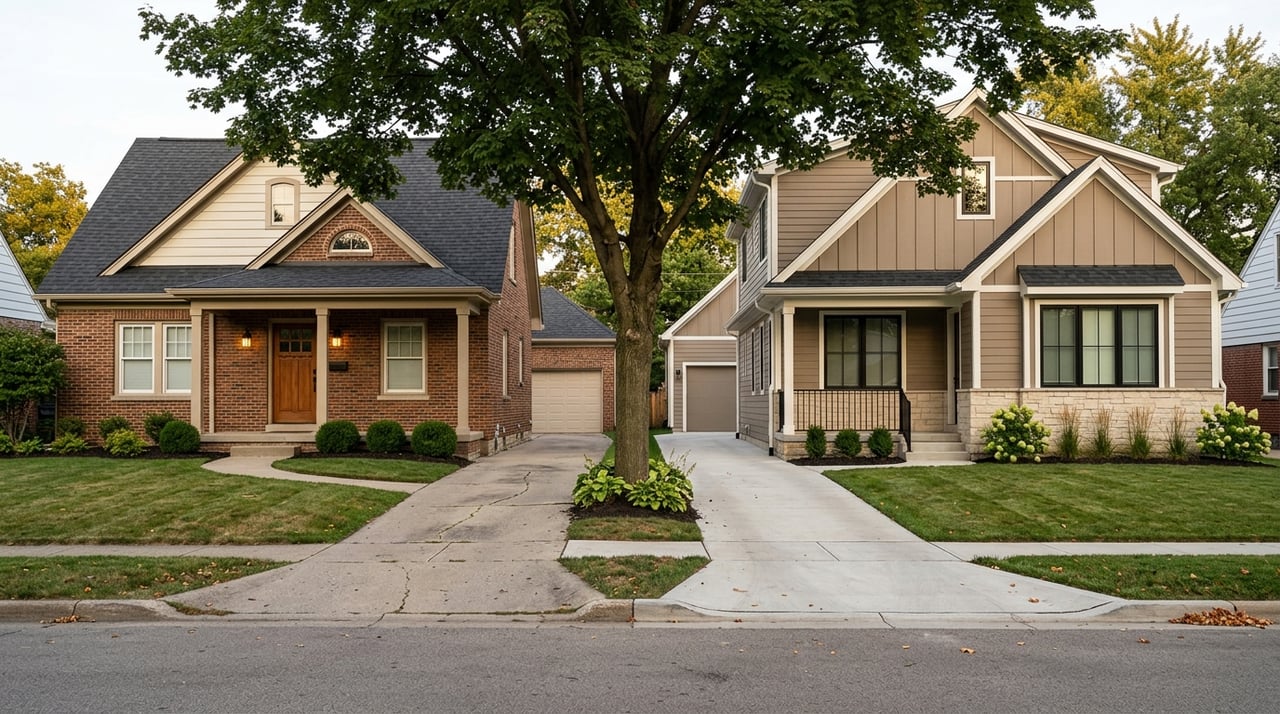
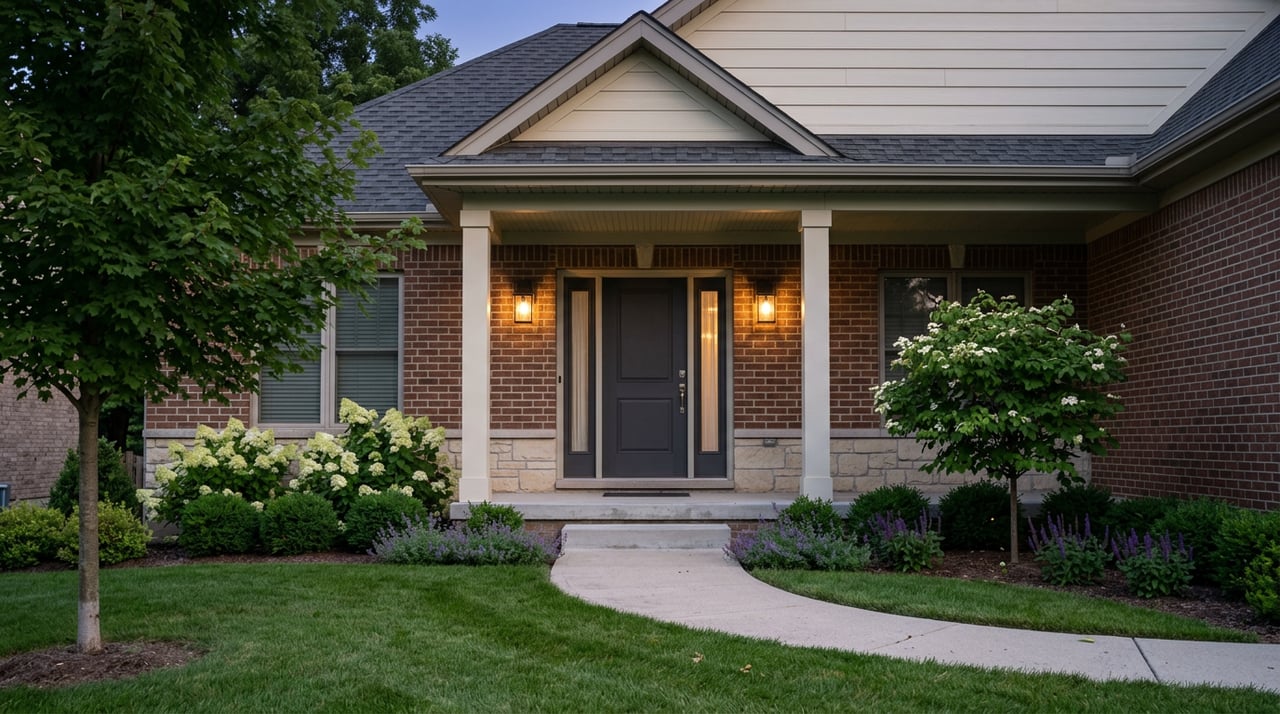
Established Beavercreek neighborhoods usually stand out for their sense of maturity. Listings commonly mention mature trees, generous lots, brick exteriors, and well-established streetscapes. If you want a neighborhood that feels layered and less uniform, this side of the market may appeal to you.
You may also see more variation from home to home. In established areas, it is common to find ranch homes, traditional two-story layouts, and resale properties with different update levels. That variety can be a plus if you want options beyond a more standardized floorplan.
Lot size is another draw in many established neighborhoods. Current examples include homes on lots around 0.45 acres, and some neighborhoods feature larger footprints and more spread between homes. For buyers who value outdoor space or a more mature setting, that can be a meaningful advantage.
The biggest benefit of an older community is often character. The biggest tradeoff is usually condition range. Since these homes are older, you should expect more differences in updates, maintenance, and overall finish level from one property to the next.
That does not make established homes a worse choice. It simply means your search may require more careful comparison. One resale home may feel move-in ready, while another may need cosmetic changes or larger repairs over time.
Price can also vary more than some buyers expect. While many established Beavercreek resale homes appear in the high $200,000s to mid-$300,000s, larger or more updated homes can move into the $500,000s and above. In other words, established does not always mean lower priced.
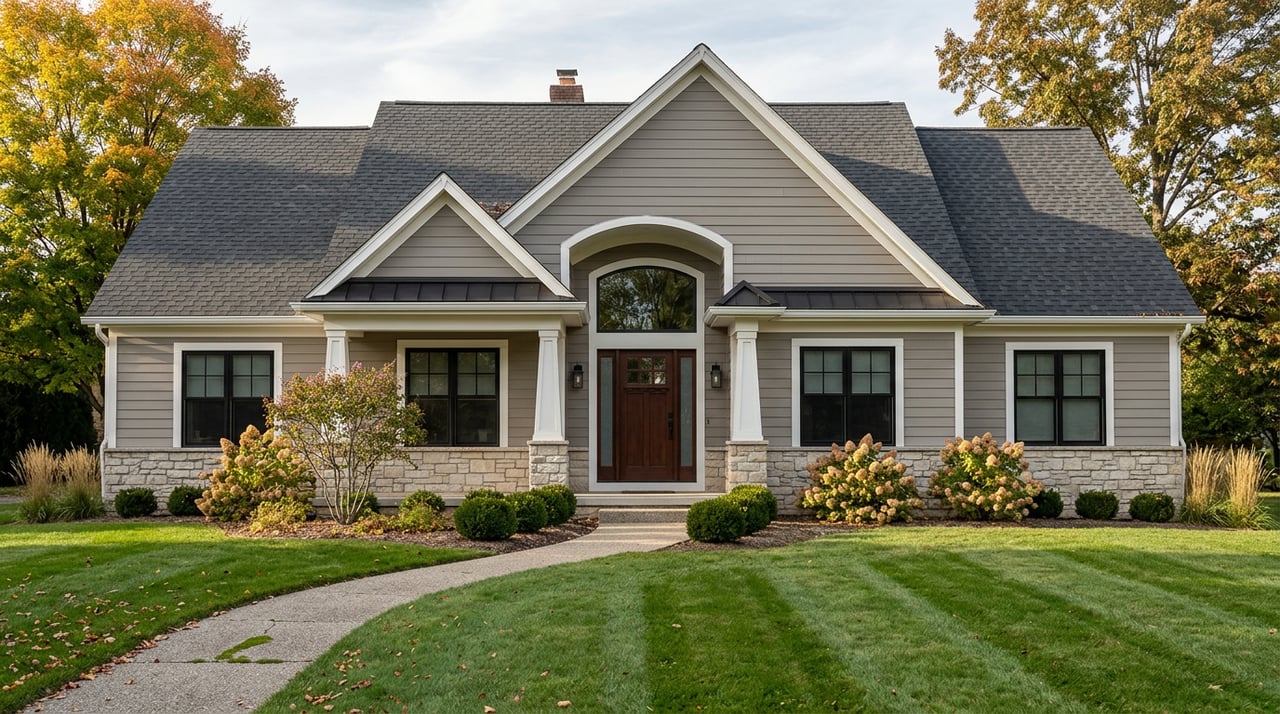
Newer Beavercreek communities usually bring a more planned feel. Community pages and builder inventory often highlight sidewalks, cul-de-sacs, ponds, open space, and multiple floorplan choices. If you like predictability and a more cohesive layout, newer areas may feel like a strong fit.
You may also find features that support a lower-maintenance lifestyle. While finishes and lot sizes vary by community, newer homes often attract buyers who want more current layouts and less immediate repair uncertainty. That can be especially helpful if you are managing a relocation or a fast move timeline.
Beavercreek’s local park and trail system also adds to the appeal of newer growth areas. The city highlights 24 parks, the 15-mile Creekside Trail, and the 148-acre Spring House Park master plan. Outdoor access is part of the lifestyle here, whether you choose an older area or a newer one.
Sky Crossing reflects a classic newer-community setup. It is described as having 37 acres of open space, tree-lined streets, ponds, sidewalks, and both ranch and two-story plans. Homes there start around $410,995 based on current builder information.
Amberwood shows a newer option with a higher price point and a broader style range. Builder information highlights walking paths, seating areas, ponds, and both single-family and condominium designs, with pricing shown from about $489,000 to $702,000 and up. If you want newer construction but also want different housing types, this kind of community may be worth a closer look.
Nathanials Grove offers another angle. It is marketed as peaceful and rural in feel, but still close to Beavercreek conveniences, with amenities that include a pool, trails, playground, and basketball court. Builder and inventory information place pricing around $419,990 into the mid-$500,000s, and its access to I-675 and Wright-Patterson makes it especially relevant for relocation buyers.
At the higher end, Bent Creek Woods shows that newer does not always mean compact or entry-level. Builder information highlights wooded homesites, golf-course views, walking paths, ponds, and a range of floorplan types. Prices there run from about $698,000 to $922,000 and up.
One of the biggest misconceptions buyers have is that all newer communities are basically the same. In Beavercreek, that is not true. Some newer homes sit on standard suburban lots, while others are placed on larger premium homesites.
Price and lifestyle can also vary widely. Some communities offer lower-maintenance options, while others focus on larger homes and amenity packages. The common thread is usually newer streetscapes, newer floorplans, and more deliberate community planning.
When you are deciding between established and newer parts of Beavercreek, it helps to narrow the choice to a few practical questions. Instead of comparing homes only on age or price, think about how each area supports your daily life.
Ask yourself:
These questions matter because Beavercreek offers real variety. The right answer is usually about tradeoffs, not about one option being universally better.
Beavercreek’s overall market sits in the low-to-mid $300,000s based on current market snapshots. Recent data shows a median sale price around $329,803 for the three months ending May 2026, while Zillow reports an average home value of $325,928 and a median sale price of $313,700 in early 2026.
That market backdrop is helpful, but your community choice may place you in a very different price band. Established resale homes often cluster around the low-to-mid $300,000s, though larger or updated homes can rise much higher. Newer construction commonly starts in the low $400,000s and can stretch into the $500,000s, $700,000s, and beyond in premium sections.
That is why the question is rarely as simple as older equals affordable and newer equals expensive. In Beavercreek, both categories include a wide range of options.
If you want mature trees, more variation in architecture, and lots that may feel more spacious, established neighborhoods may be the better match. If you want newer finishes, a more planned setting, and community amenities, newer areas may make more sense.
If you are relocating, timing and commute may deserve extra weight in your decision. A home that looks perfect on paper can still feel less practical if the drive, layout, or maintenance needs do not match your season of life. That is where a clear plan helps.
The best choice usually comes down to balancing four things: commute, lot character, maintenance tolerance, and budget. When you look at Beavercreek through that lens, the search becomes much easier to manage.
Whether you are moving across town or relocating to the Dayton area, choosing the right Beavercreek community starts with understanding how you want to live day to day. If you want calm guidance, clear communication, and local insight as you compare your options, Amber Lynn Dunn would love to help you take the next step.
Stay up to date on the latest real estate trends.
Get assistance in determining current property value, crafting a competitive offer, writing and negotiating a contract, and much more. Contact Amber today to discuss all your real estate needs!